


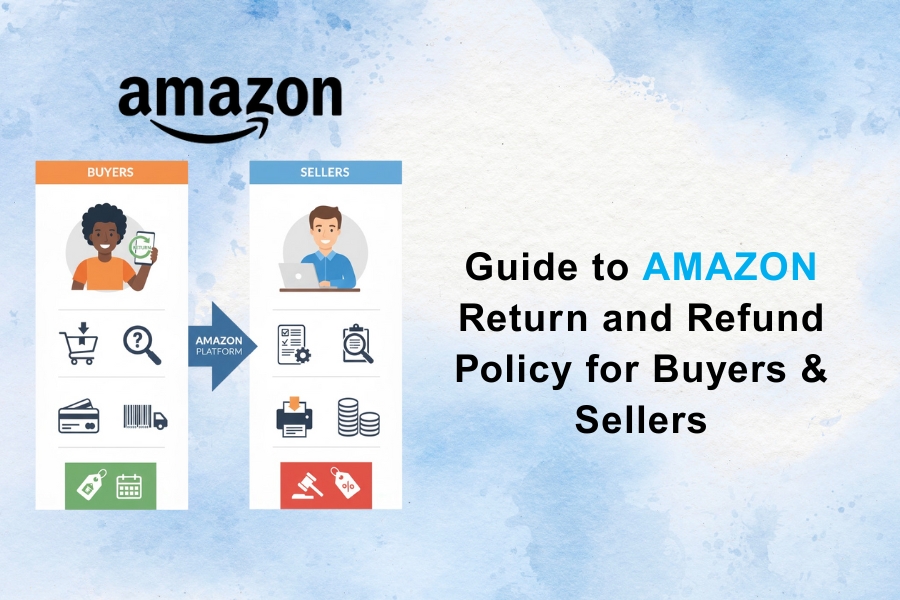
Managing returns and refunds on Amazon can be challenging for both buyers and sellers. While buyers want quick refunds and easy returns, sellers must ensure they comply with Amazon’s strict policies to maintain their account health. Understanding the Amazon return and refund policy is essential to avoid penalties, protect profits, and maintain customer satisfaction. In this blog, we’ll provide a complete guide to Amazon’s return and refund policy for buyers and sellers, and explain how eCommerce management services can simplify the entire process for your business.
1. Overview of Amazon’s Return and Refund Policy
Amazon offers a customer-first return policy designed to enhance the shopping experience. Most products purchased on Amazon can be returned to Amazon within 7 to 30 days of delivery depending on the product type and the seller‘s return policy.
Key Highlights:
-
Customers can begin their return process by going to their Amazon account in “Your Orders.”
-
Once the product is received and verified, refunds are made to the original credit/debit card used for the purchase.
-
Some products, such as perishable items or digital items, may not be returnable.
For sellers, adhering to these policies is critical, as poor return handling can affect account performance metrics and overall visibility on the platform.
2. Return Policy for Buyers
Amazon ensures a seamless experience for buyers by offering a simple and transparent return process.
Steps for Buyers:
-
Visit the ‘Your Orders’ section and select the item that you would like to return.
-
Choose the reason for return from the provided options.
-
Select the preferred return method (pickup or drop-off).
-
Once the return has been processed, Amazon will either refund you or send you a replacement.
Refund Timelines:
-
Credit/Debit Card Refunds: 3–5 business days
-
Amazon Pay Balance: Within 24 hours
-
Cash on Delivery (COD): Refund issued via bank transfer within 3–7 days
Tip for Buyers: Be sure to return your item in its original packaging and in an undamaged state to qualify for the full refund.
3. Return Policy for Sellers
Amazon’s return process is both beneficial and detrimental for sellers. While it builds customer trust, it can lead to product losses if not managed properly.
Seller Guidelines:
-
Amazon automatically authorizes returns for Fulfilled by Amazon (FBA) products.
-
For MFN sellers, Amazon requires quick approval and processing of returns.
-
Sellers must inspect returned items before issuing refunds.
Sellers are expected to maintain:
-
Accurate product listings to reduce return rates
-
Timely refund issuance to avoid negative feedback
-
Return defect rate below 5% to stay compliant with Amazon’s performance standards
4. Common Reasons for Returns and Refunds
Understanding why customers return products can help sellers reduce future issues.
Most common reasons include:
-
Wrong or defective product delivered
-
Product not matching the description or image
-
Size or color issues (in apparel and accessories)
-
Damaged packaging or incomplete delivery
Using proper Amazon account management services, sellers will track these reasons and optimize pricing options to minimize returns.
5. How Refunds Are Processed on Amazon
Once the returned product is received, Amazon inspects it and processes a refund based on the item’s condition.
Types of Refunds:
-
Full Refund: For eligible, undamaged products returned within the time frame.
-
Partial Refund: For used or damaged items.
-
Replacement: Customers can opt for a replacement instead of a refund in some cases.
6. Challenges Sellers Face with Returns
Sellers often face difficulties managing returns due to issues like:
-
High return rates affecting profit margins
-
Fake return claims from customers
-
Damage during return shipping
-
Complex refund approvals
Ignoring these can result in account suspension or poor performance metrics. This is where Professional account management services play a vital role.
7. How eCommerce Management Services Help
Professional eCommerce account management services handle the end-to-end process, helping sellers stay compliant and efficient.
Key Benefits:
-
Return Analysis: Identify frequent return reasons and fix listing issues.
-
Inventory Optimization: Manage FBA and non-FBA returns efficiently.
-
Refund Monitoring: Observe and verify refund claims to diminish fraud.
-
Policy Compliance: Verify seller account maintenance in accordance with Amazon’s return policies.
-
Customer Support: Handle return-related queries to maintain seller ratings.
By outsourcing to experts, Amazon sellers can focus on business growth instead of operational hassles.

